
Essential Romanian Vocabulary For Clothing And Accessories

Author
One of the most practical topics you can learn in any language is clothing (îmbrăcăminte).
Whether you are packing your suitcase for a trip to the Carpathian Mountains, going shopping at a mall in Bucharest, or simply complimenting a friend on their outfit, you need these words.
Why is this important?
Romanian fashion is quite similar to the rest of Europe, but we have specific words that don’t always translate directly. Also, because Romania has four very distinct seasons, you need to know the difference between a thick winter coat and a light summer dress.
In this guide, I’ll break down the most common items of clothing, footwear, and accessories. I’ll also share some specific Romanian phrases to help you use them in conversation.
Table of Contents:
The basics: Tops and bottoms
First, let’s start with the items you wear every day.
In Romanian, nouns have genders (masculine, feminine, and neuter). This can change the ending of the word when you make it plural.
Don’t stress too much about the grammar rules right now. It is more important to just recognize the words.
Here are the most common everyday clothes:
| English | Romanian (Singular) | Romanian (Plural) |
|---|---|---|
| T-shirt | Tricou | Tricouri |
| Shirt (button-down) | Cămașă | Cămăși |
| Blouse | Bluză | Bluze |
| Pants / Trousers | Pantaloni | Pantaloni |
| Jeans | Blugi | Blugi |
| Dress | Rochie | Rochii |
| Skirt | Fustă | Fuste |
| Suit | Costum | Costume |
A quick tip: The word pantaloni is almost always used in the plural, just like “pants” in English.
Outerwear for cold weather
Winters in Romania can get very snowy and cold, especially if you are visiting the mountains.
If you visit between November and March, you will definitely need to know these words.
| English | Romanian |
|---|---|
| Jacket | Geacă |
| Coat (thick/wool) | Palton |
| Sweater / Pullover | Pulover |
| Hoodie / Sweatshirt | Hanorac |
| Vest | Vestă |
| Raincoat | Impermeabil |
Footwear and shoes
The general word for footwear is încălțăminte.
However, in spoken Romanian, we usually refer to the specific type of shoe.
Interestingly, many Romanians (especially younger generations) use the word adidași to refer to sneakers or athletic shoes in general, regardless of the brand. This is similar to how some people call all tissues “Kleenex”.
| English | Romanian |
|---|---|
| Shoes (Dress/General) | Pantofi |
| Sneakers / Trainers | Adidași / Pantofi sport |
| Boots | Cizme |
| Ankle Boots | Ghete |
| Sandals | Sandale |
| Socks | Șosete |
| Slippers | Papuci |
Accessories and essentials
An outfit isn’t complete without accessories (accesorii).
Pay attention to the difference between căciulă and pălărie.
A pălărie is a hat with a brim (like a fedora or sun hat), while a căciulă is a beanie or knit cap used specifically for warmth in winter. If you ask for a pălărie in December, people might look at you funny!
- Hat (beanie/winter): Căciulă
- Hat (brimmed): Pălărie
- Cap (baseball): Șapcă
- Scarf (winter): Fular
- Scarf (fashion/light): Eșarfă
- Gloves: Mănuși
- Belt: Curea
- Tie: Cravată
- Glasses: Ochelari
- Sunglasses: Ochelari de soare
- Bag / Purse: Geantă
- Backpack: Rucsac
- Wallet: Portofel
Traditional Romanian clothing
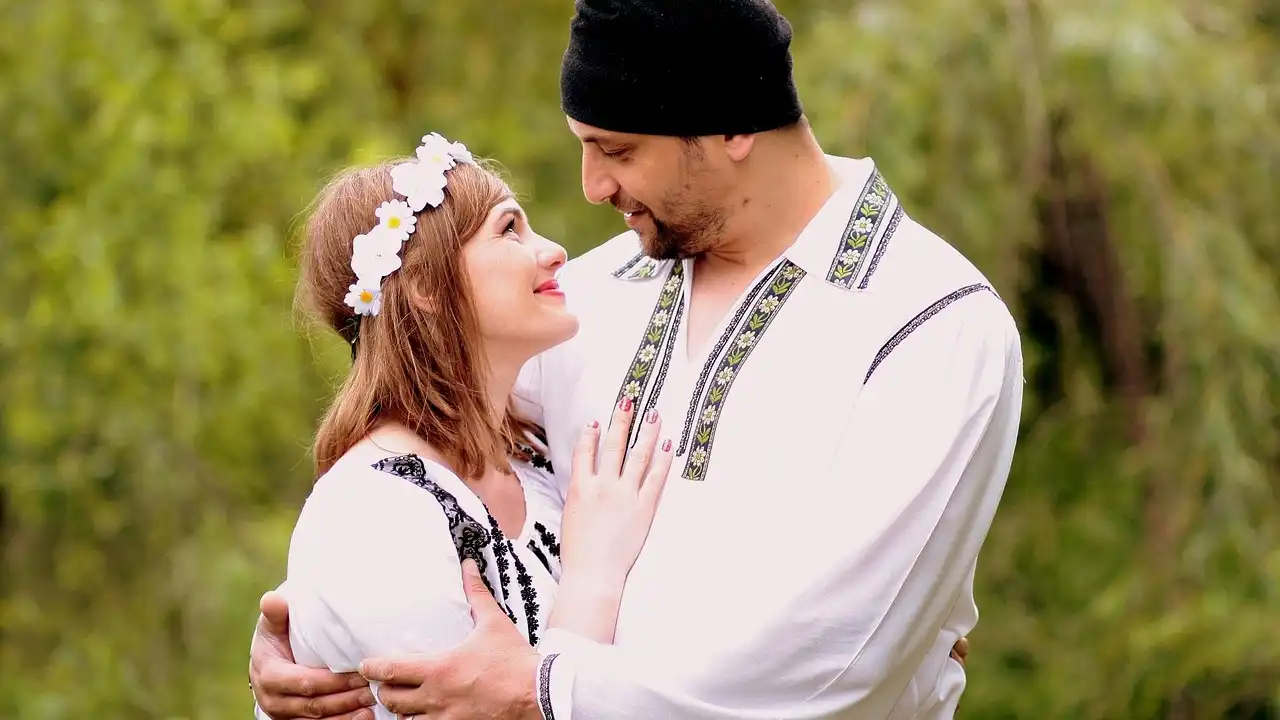
I cannot write a guide about clothing without mentioning the most beautiful piece of Romanian heritage: ia.
The ie (pronounced somewhat like ‘yee-eh’) is the traditional Romanian blouse worn by women. It is made of white linen or cotton and features intricate hand-embroidered patterns.
The patterns and colors traditionally vary depending on the historical region of Romania (like Transylvania, Moldova, or Muntenia).

Ea poartă o ie frumoasă.
Today, the ie has become a fashion statement and is worn casually with jeans (blugi) or skirts.
Verbs and useful phrases for shopping
Now that you have the vocabulary lists, you need to know how to use them in sentences.
The most common verb you will use is a purta (to wear).
Ce porți astăzi?
Eu port o rochie albastră.
Shopping phrases
If you go to a mall (la mall) or a clothing store (magazin de haine), these phrases will be very helpful.
When you want to try something on, you use the verb a proba.
Pot să probez asta?
Unde este cabina de probă?
Aveți o mărime mai mare?
Este prea strâmt.
Cât costă?
Summary
Learning clothing vocabulary is a great way to boost your daily conversation skills.
Start by looking in your own closet and trying to name every item in Romanian. Remember that pantofi are shoes, pantaloni are pants, and if it’s cold outside, you definitely need a căciulă.
